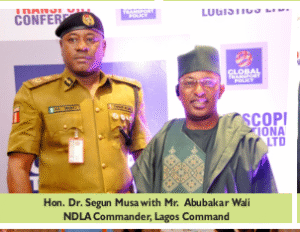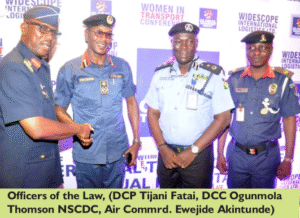

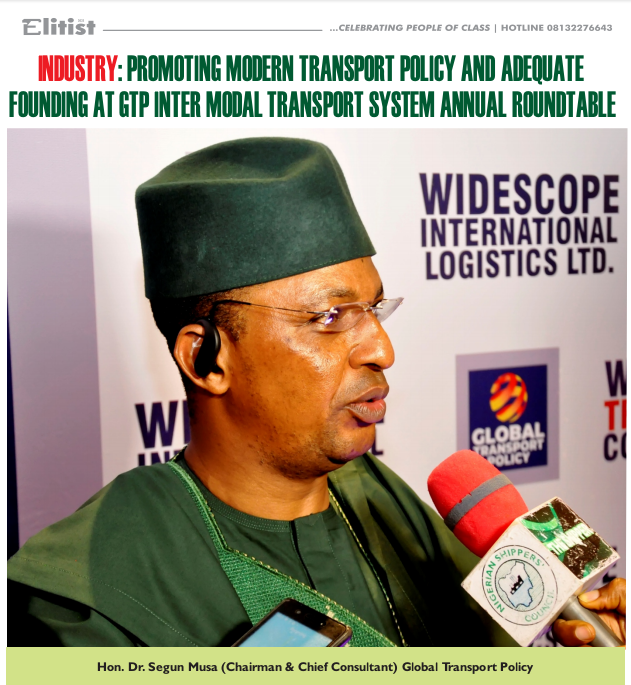
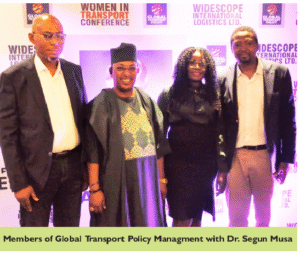
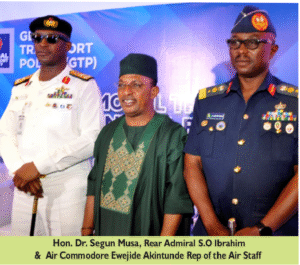
On Thursday, May 15th, 2025, the second edition of the Global Transport Policy (GTP) Intermodal Transport System Annual Roundtable was held at the prestigious Marriott Hotel in Ikeja, Lagos. Organized by Widescope International Logistics Limited under the visionary leadership of Hon. Dr. Oluwasegun Musa, the event brought together leading experts, policymakers, and stakeholders to explore pathways for modernizing Nigeria’s transport infrastructure and aligning with global logistics standards.
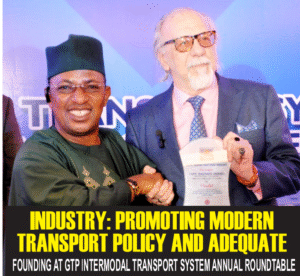
With a strong emphasis on promoting sustainable intermodal transport systems, the roundtable featured insightful discussions on transport ethics, policy reforms, investment opportunities, and the integration of road, rail, and waterway networks. The event drew dignitaries and stakeholders from diverse sectors, reflecting the urgency and importance of reshaping Nigeria’s transport landscape.
Distinguished Guests and Thought Leaders
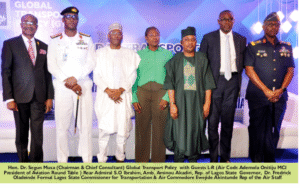
The event was honored by notable attendees, including:
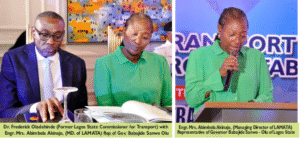
His Excellency, Governor Babajide Sanwo-Olu of Lagos State (ably represented by Engr. Mrs. Abimbola Akinajo, Managing Director of LAMATA),
Dr. Fredrick Oladeinde, former Commissioner for Transportation, Lagos State,
Prof. Jonathan Aremu, former Acting Vice Chancellor of Covenant University,
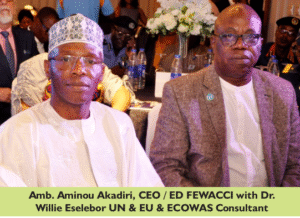
Dr. Willie Eselebor, Consultant at ECOWAS,
Amb. Aminou Akadiri, regional economic development expert,
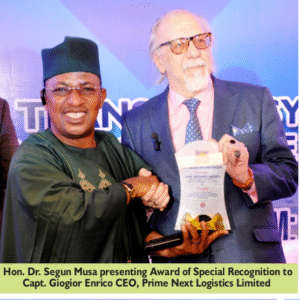
Capt. Giorgio Enrico, CEO of Prime Next Logistics Limited,
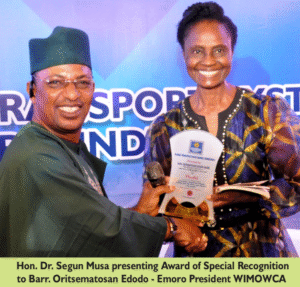
Barr. Oritsematosan Edodo-Emore, President of WIMOWCA,
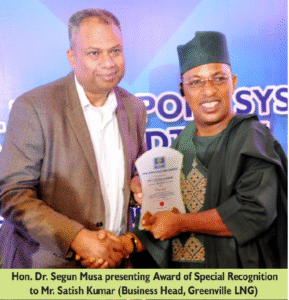
Mr. Satish Kumar, Business Head at Greenville LNG,
Mr. Oluwadamilola Emmanuel, GM of LASWA,
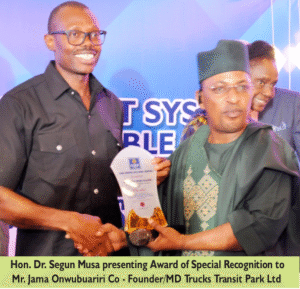
Mr. Jama Onwubuariri, Co-Founder/MD of Trucks Transit Parks Limited,
Mr. Adetayo Bamiduro, Executive Director of Max Drive,
Ambassador Nicky Maxwell, CEO of Dachec Global Resources,
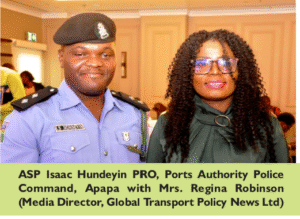
Ambassador Regina Robinson, Media Director at Global Transport Policy,
along with many other prominent figures from the transport, logistics, and development sectors.
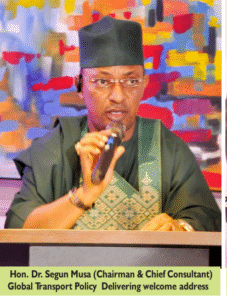
Strategic Opening Address by Dr. Oluwasegun Musa
In his opening remarks, Hon. Dr. Oluwasegun Musa, Chairman and Chief Consultant of Global Transport Policy and CEO of Widescope International Logistics Limited, highlighted Nigeria’s pressing infrastructure challenges. He stated that the nation has suffered significant economic losses due to inadequate road networks and underdeveloped rail and waterway systems. Dr. Musa emphasized the need for annual investments exceeding $2.5 billion in these critical sectors to meet national demands and drive economic growth.
He also advocated for intermodal connectivity—integrating road, rail, and waterway transport into a seamless, efficient logistics network. He stressed that public-private partnerships (PPPs) are vital to achieving this goal, as they can unlock investments, reduce costs, enhance productivity, and position Nigeria competitively on the global stage.
Dr. Musa, who also serves as Vice President of the National Association of Government Approved Freight Forwarders (NAGAFF), urged the government and private stakeholders to collaborate closely in building a sustainable and inclusive transport system that aligns with Nigeria’s broader development agenda.
Keynote and Expert Contributions
Delivering the keynote address, Prof. Jonathan Aremu critiqued Nigeria’s existing transport policies for lacking to an integrated, forward-looking framework. He cited global examples of multimodal transport systems operated under unified contractual models that are outperforming conventional systems in terms of efficiency and adaptability.
Dr. Fredrick Oladeinde, in his presentation, emphasized that the transformation of Nigeria’s transport sector hinges more on visionary leadership and strategic planning than on technology alone. He called for consistent investment, long-term planning, and adaptive policy structures to support future transportation needs.
Collaborative Insights for Future Growth
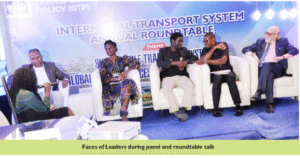
The roundtable concluded with a consensus among stakeholders: Nigeria must embrace bold policy reforms, infrastructure investment, and a unified vision to achieve a world-class transport system. Participants echoed the importance of fostering collaborative governance, innovation, and inclusive growth as key pillars for unlocking the country’s full economic potential and improving quality of life.